


 English
 русский
 中文简体
中文简体 عربى
عربى
Drywall screws play a central role in modern interior construction. From residential partitions to commercial ceilings, the right fastener directly affects structural stability, surface finish, and long-term durability. Understanding the differences between thread types, coatings, and applications helps reduce installation problems such as loose panels, surface cracking, or corrosion over time.
What Are Drywall Screws Designed to Do?
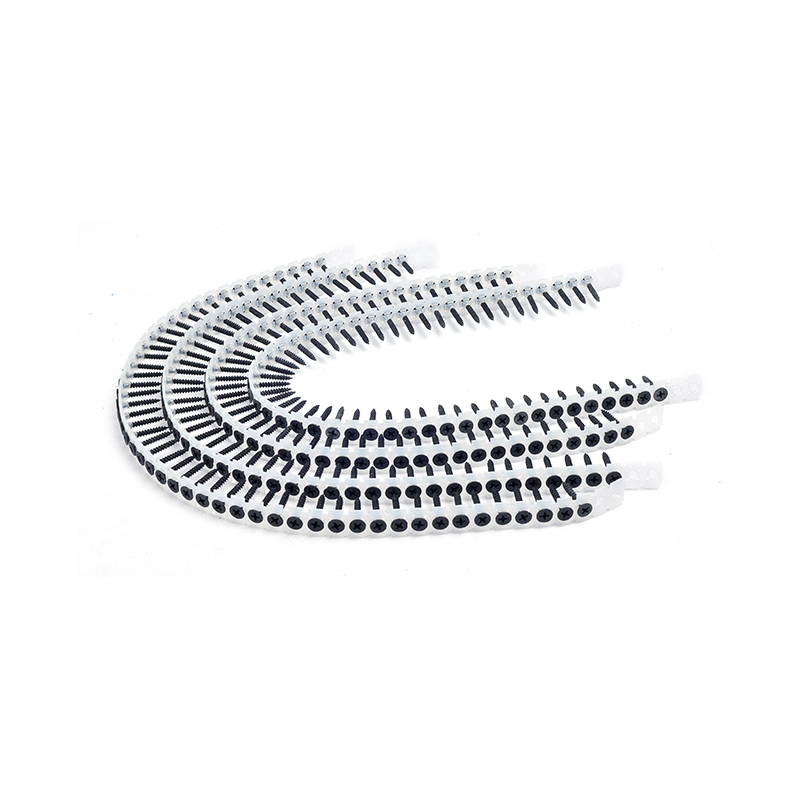
Drywall Screws are engineered specifically for fastening gypsum board to structural framing, including wood and metal studs. Their sharp point allows quick penetration, while the thread pattern grips the base material firmly.
The flat head design sits flush with the drywall surface, preventing tearing of the paper layer. A small lip beneath the head supports clean countersinking, helping contractors achieve a smooth finishing surface for taping and painting.
Compared with general-purpose screws, these fasteners focus on controlled penetration, stable clamping force, and compatibility with gypsum board density.
Understanding Thread Types in Drywall Screws
Thread design directly impacts holding strength and installation efficiency.
Fine Thread Screws
Fine thread versions are typically used for wood studs. The tighter thread spacing provides a steady grip without aggressively cutting into softer wood fibers. This reduces splitting and supports a smoother finish on the wall surface.
Coarse Thread Screws
Coarse thread screws are often selected for metal stud framing. The wider, sharper threads bite into thin-gauge steel more effectively, reducing slippage during driving. This structure improves engagement when attaching boards to light steel framing systems.
High-Low Thread Design
High-low thread configurations combine alternating thread heights. The lower threads assist with penetration, while the higher threads reinforce holding power. This design can be helpful when working with mixed-density substrates.
Selecting the correct thread style is not just about preference; it directly affects torque control, grip stability, and surface finish.
Why Coating Matters in Moisture-Prone Areas
Black phosphate coating is standard for many Drywall Screws. It offers moderate corrosion resistance and performs well in dry interior environments.
However, basements, kitchens, bathrooms, and exterior-facing partitions introduce higher humidity exposure. In such conditions, galvanized screws with zinc coating provide added protection against rust formation.
Corrosion around screw heads may discolor finished walls and compromise fastening strength over time. Matching the coating type to environmental conditions reduces maintenance issues in long-term installations.
Choosing the Correct Length for Different Applications
Screw length depends on drywall thickness and framing material. Common drywall panels range from 1/2 inch to 5/8 inch thick. The screw must penetrate deep enough into the stud to secure the board without protruding through the opposite side.
For single-layer drywall on wood studs, penetration depth of around 1 inch into the framing is typical. For metal studs, engagement depth varies depending on gauge thickness.
Ceiling applications often require careful length selection due to panel weight. Adequate penetration helps maintain panel stability and prevents sagging over time.
Matching Fastener Design to Project Needs
Drywall Screws are not interchangeable with general construction screws. Thread pattern, coating type, and dimensional accuracy all contribute to fastening stability and wall finish quality.
Working with an experienced Drywall Screws Manufacturer simplifies technical selection and helps maintain consistent installation standards across different construction environments. Careful product matching reduces rework, protects wall surfaces, and supports long-term structural integrity in drywall systems.

 Quick Links
