


 English
 русский
 中文简体
中文简体 عربى
عربى
In construction supply chains, drywall screws often look like a small detail. They are small, uniform, and easy to overlook. Yet their role is more sensitive than it appears. A single project may depend on thousands of them working quietly in the background, holding materials in place without drawing attention.
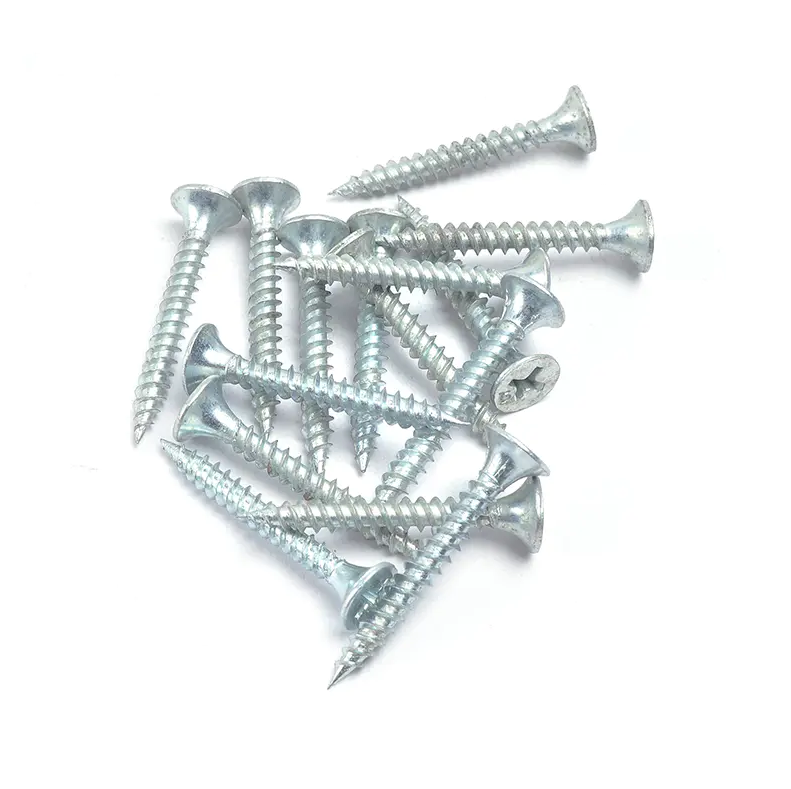
Behind every batch of screws, there is a factory process that shapes consistency, usability, and trust between supplier and buyer. Not every production site works in the same way. Some focus on volume. Others focus on stability and repeatable results. The difference becomes visible over time, especially when products are used in real construction environments.
A reliable drywall screws factory is not defined by a single feature. It is a combination of habits, control methods, communication style, and long-term discipline.
What defines a reliable drywall screws factory in today's market?
Reliability in manufacturing is rarely about appearance. A factory may look modern or simple, large or compact. These visual cues do not always reflect how stable the output is.
What matters more is predictability. A dependable factory tends to produce screws that behave the same way from one batch to another. Shape consistency, surface stability, and overall usability remain steady even when orders vary in size.
There is also a quiet discipline in how work is organized. Materials are not treated as interchangeable inputs. Each step is handled with awareness of its effect on the final result. This mindset influences everything from early preparation to final handling.
In many cases, reliability also shows up in how a factory responds when something changes. Market demand shifts. Order patterns vary. A steady manufacturer adjusts without disrupting the basic structure of production. That balance is not always easy to maintain, and it is often what separates stable operations from inconsistent ones.
How does raw material handling influence consistency?
Before any shaping or forming begins, materials already carry potential differences. Even when they appear similar, their behavior during processing can vary slightly.
A careful factory treats this stage as more than storage or supply intake. Materials are observed, organized, and prepared in a way that reduces unpredictability later in the process.
One important factor is how materials are kept before use. Exposure conditions, handling methods, and storage routines all influence how they perform during shaping. Small variations at this stage can later appear as unevenness in the final product.
Another point is selection consistency. A reliable factory avoids frequent changes in material sources without reason. Stability in input often leads to stability in output.
This stage is not visible to end users, yet it shapes much of what follows. When raw materials are handled with care, later steps require fewer corrections.
Why does production flow matter more than machine size?
It is easy to assume that larger equipment automatically means stronger capability. In practice, production flow plays a more meaningful role.
Flow refers to how smoothly materials move from one stage to another. When the sequence is organized, interruptions are reduced. Each step has a clear purpose and timing, which helps avoid unnecessary variation.
A well-structured factory often shows quiet efficiency. There is no rush between stages. Work progresses in a steady rhythm. This rhythm helps maintain alignment between shaping, forming, and finishing.
Machine size alone does not guarantee this stability. Without coordination, even advanced equipment can produce uneven results. On the other hand, a well-managed flow can support consistent output even in simpler setups.
The key is balance. Each stage should support the next without creating pressure or delay. When that balance is maintained, the final product tends to reflect it naturally.
What role does surface treatment play in real-world use?
A drywall screw is rarely judged by appearance alone. Its surface behavior during use often matters more than how it looks on a table.
Surface treatment influences how the screw interacts with its environment. It affects how smoothly it enters materials and how it holds up over time. A stable surface helps reduce friction during installation, which makes handling more predictable.
It also plays a role in durability. Construction environments are not always controlled. Moisture, dust, and varying conditions can all affect metal surfaces. A well-prepared finish helps the screw maintain its condition under these influences.
Another subtle effect is user experience. When screws behave consistently during use, workers do not need to adjust their technique frequently. This reduces small interruptions during installation work.
A reliable factory pays attention to this stage not as an afterthought, but as part of the overall product behavior.
How does a factory maintain stable quality across batches?
Consistency across batches is one of the noticeable signs of a dependable operation. It is also one of the hardest to maintain.
Even when production steps remain the same, slight variations can appear over time. A reliable factory focuses on reducing these shifts through steady internal routines.
One approach is repetition of process patterns. When each production cycle follows a familiar structure, variation is less likely to accumulate. Workers become familiar with timing, sequence, and handling expectations.
Observation also plays a role. Regular checks during production help identify small changes before they become larger differences. This does not always involve complex systems. Sometimes it is simply careful attention at key points in the workflow.
There is also a cultural aspect. When consistency is valued within the factory environment, small deviations are less likely to be ignored. Over time, this mindset becomes part of how work is carried out.
What makes communication and customization capability important?
Factories do not run independently. They constantly cooperate with clients, who all have different demands and use cases for the products.
Open and effective communication keeps misunderstandings from happening. When both sides talk through all requirements clearly, production can follow the agreed standards closely. This means fewer revisions and fixes further down the line.
The ability to provide custom work is also highly valuable. It is never just about changing a product's look. The real focus is tailoring items to suit different working environments.
Some clients only need minor changes to the product shape or its handling performance. Others pay more attention to whether the goods can work well with their existing production routines. A flexible manufacturer can make these adjustments easily, without interfering with regular production.
There is no need for frequent, random changes. What matters is making sensible, controlled tweaks. Companies that stay well-organized while being able to adapt will always build more reliable long-term partnerships.
How do packaging and storage practices affect delivery value?
Products still need to go through packaging and storage after being manufactured, and these steps greatly determine the product condition when finally delivered and put into use.
Quality packaging serves more than just a protective purpose. It shows a manufacturer's attention to post-production details. Proper sorting and protective packaging can effectively prevent surface damage and messy arrangement issues during transportation.
Storage management is equally essential. Finished products are still affected by external surroundings. Poor storage environments may cause subtle changes to the products. Therefore, standardized storage methods can keep product quality consistent before delivery.
Neat and standardized packaging also brings practical convenience for buyers. It makes product handling and distribution much simpler and avoids confusion during subsequent use and arrangement.
Though packaging and storage belong to the later stage of production, they greatly impact the overall product experience and leave a direct impression on actual usage scenarios.
What signals show long-term stability of a manufacturing partner?
Stability is not always visible in short interactions. It becomes clearer over time, through repeated cooperation and steady output.
One signal is predictability. When orders are placed at different times, results remain aligned. This consistency builds trust in the background, without needing constant explanation.
Another sign is responsiveness. Not in speed alone, but in clarity. When questions are answered in a straightforward way, coordination becomes easier.
Internal discipline is also noticeable indirectly. Factories that maintain organized workflows tend to show fewer disruptions in delivery and output behavior.
Long-term stability is often reflected in small details rather than large declarations. The way processes are handled day after day becomes the reliable indicator.
How does real-world usage reveal factory differences?
Lab conditions can show basic performance, but real usage environments tell a different story. Construction sites, storage rooms, and transport conditions all introduce variation that cannot always be controlled.
In these environments, small differences between factories become more visible. Screws that were similar in appearance may behave differently during installation or handling.
Some may enter materials smoothly. Others may require adjustment. Some maintain stability during use. Others show variation across batches.
These differences are not always dramatic, but they are noticeable over time. This is where the underlying habits of a factory become visible.
A reliable China Drywall Screws factory tends to produce results that feel steady in these unpredictable conditions. Not because everything is controlled perfectly, but because the process behind it is structured enough to handle variation without losing balance.

 Quick Links
